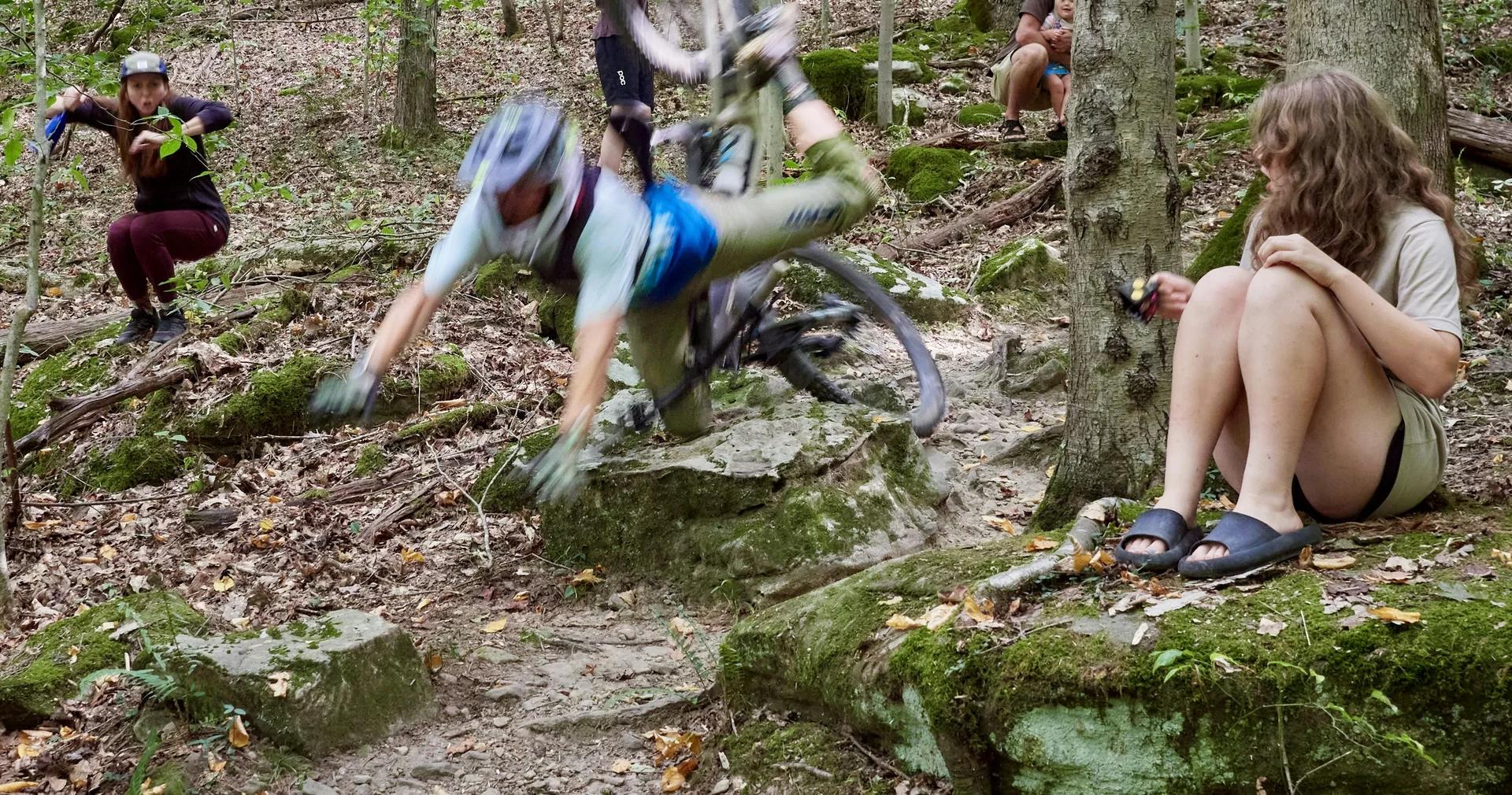
Responding to a fall involving a child during a bike ride.
Story
On a beautiful spring morning, 12-year-old Élodie decides to go for a bike ride on the cycling path near her home. She especially loves this path, which winds through a lovely park. As she rides at a moderate speed, her wheel suddenly hits a rock. Her bike veers off course, causing her to fall. Lying on the ground, slightly stunned, Élodie takes a few deep breaths to calm herself. Before she can get up, a passerby approaches her. In a reassuring tone, he tells her his name is Thomas, that he is there to help, and that he is a first aid responder.
Thomas begins by asking Élodie if she is feeling any particular pain. She mentions that her knees and elbows hurt, but that she can move her limbs without much difficulty. Thomas quickly inspects her injuries and notes that they are mostly just scrapes. He takes his first aid kit out of his backpack to treat them. With antiseptic wipes, he gently cleans the scrapes, then applies bandages to the affected areas.
Thanks to Thomas's professional and caring help, Élodie feels increasingly reassured. She thanks him and mentions that, before his arrival, she had been trying to calm herself but still felt a bit panicked. Thomas replies that she did well to stay calm and that it is also very important to always check that there are no serious injuries before moving.
After finishing the first aid, Thomas helps Élodie get up slowly. Since Élodie's bike is still in good condition and she feels able to continue on her own, Thomas can be on his way. Before leaving her, he advises her to take her time and rest a little before setting off again. She thanks him warmly and, after a few minutes of rest, she resumes her ride.
Back home, she tells her parents about her adventure. They express how proud they are of her ability to stay calm and how relieved they are that Thomas came to her aid. She learned a valuable lesson: knowing how to react in such a situation and having a first aid kit can make all the difference in continuing to enjoy her activities safely.
In summary
After this unexpected fall, Élodie was able to count on the valuable help of first aid responder Thomas, who knew how to reassure her and provide her with first aid. Thanks to his intervention, she was able to regain confidence and return home safely. This incident reminds us of the importance of knowing and following a well-defined first aid course in order to respond effectively in the event of an accident. Let's now review the specific protocol that Thomas put into practice to manage this situation optimally.
1) IMMOBILIZE THE VICTIM
Response protocol
Head trauma
By understanding the key steps of the protocol and putting them into practice, we can be better prepared to respond quickly and correctly in a similar emergency. Let's learn together the essential actions to take in order to provide optimal assistance in such situations.
Unless there is immediate danger, avoid moving the victim to prevent possible additional injuries.
Keep the victim's head and neck aligned with the body.
Use your hands to support the head if no specialized equipment is available.
Stay with the victim and reassure them until emergency services arrive.
Remain alert to any changes in their condition.
Upon their arrival, inform the responders of the victim's condition and the measures taken to help them.
Related first aid training
Provides the knowledge needed to prevent concussions and help victims.
Please click the button below to obtain the full details of the training.
Even if symptoms are not immediately visible, head impacts can be serious. It is therefore essential to remain vigilant in order to identify the presence of trauma and administer the necessary first aid as quickly as possible.
• Loss of consciousness (even brief). • Severe headaches, nausea or vomiting. • Dizziness, confusion or blurred vision. • Discharge of a clear fluid from the nose or ears.
ACTIONS TO TAKE
• Stay with the victim. • Do not let them immediately resume their activities. • Call emergency services if any of these symptoms are present.
Conclusion
It is essential to know how to react in an emergency situation, even when it initially seems minor. Élodie's story reminds us of the importance of staying calm and being ready to intervene when someone is injured. By following first aid protocols and being aware of the signs of serious injuries such as head impacts, we can all play a crucial role in the safety and well-being of others. By keeping in mind the advice and reminders presented in this article, we are better equipped to face emergency situations and offer effective assistance to those who need it.
Written by Alexandre Grenier, Founder of Formation RCR et Secourisme Québec
Illustrated by Émilie Bedard, communications officer
Laid out and reviewed by Roxanne Duchesneau, Graphic Designer